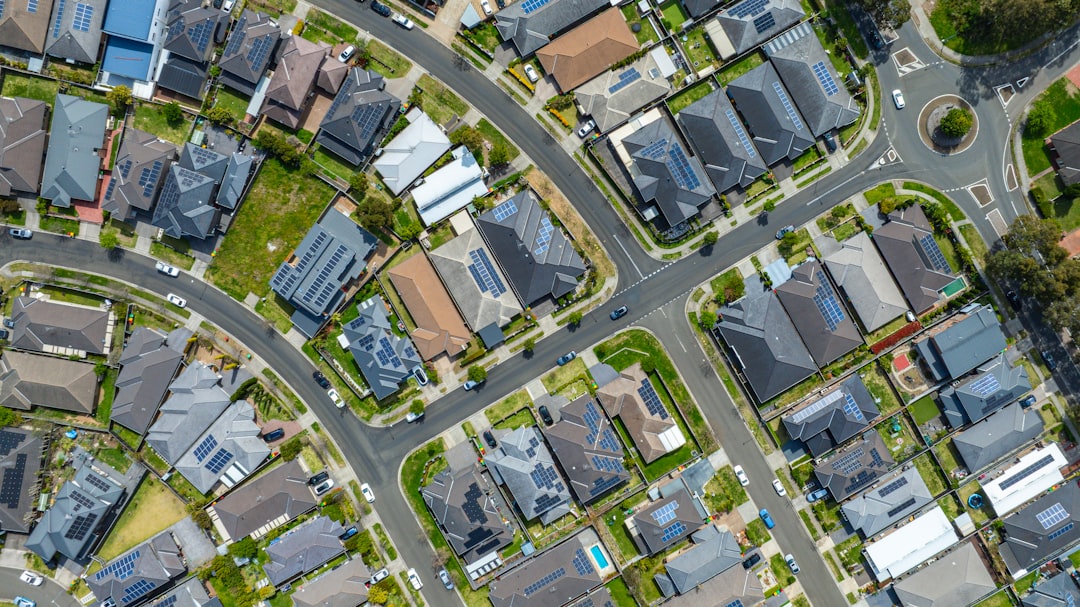
Remember when the narrative was that affordability would self-correct? Rates would ease, prices would cool, inventory would climb back, and buyers sitting on the sidelines would finally get their moment. That story made sense on paper. The market had other plans.
As of recent data, the median home price in the Phoenix metro is hovering near $430,000. A buyer putting 10% down on that home at a 7% mortgage rate is looking at a monthly payment somewhere north of $2,800 — before insurance, taxes, and HOA fees. The median household income in Maricopa County is roughly $75,000 to $80,000 annually. Do the math, and you’ll see why so many buyers are still frozen.
The Lock-In Effect Isn’t Going Away
This is the part people underestimate. Somewhere between 60% and 70% of existing mortgage holders nationally are locked into rates below 4%. That gap between their current payment and what they’d face at today’s rates is massive — often $1,000 to $1,500 per month on a comparable home. Sellers aren’t moving unless life forces them to: divorce, death, job relocation, or financial distress.
The result? Supply stays thin. Buyers compete for fewer homes. Prices don’t fall the way logic suggests they should when demand softens.
In the East Valley, I’ve watched this play out block by block. Neighborhoods in Gilbert and Chandler that would normally see steady turnover are stagnant. Listings that hit the market are usually priced optimistically, sit for 30 to 60 days, and then either get a small reduction or get pulled entirely. The Phoenix housing market stuck in a stalemate is a real thing — it’s not a headline, it’s the daily reality for agents working those zip codes.
The Entry-Level Problem Is Getting Worse, Not Better
First-time buyers have it the hardest. Starter home inventory nationally trails 2019 levels by roughly 300,000 listings. That’s not a local Phoenix problem — but Phoenix feels it acutely because population growth here continues to outpace housing construction.
Here’s what the entry-level market looks like right now:
- Homes priced under $350,000 in the Phoenix metro are nearly impossible to find in livable condition without significant commute trade-offs
- Queen Creek and Maricopa are among the only places where sub-$350K new construction is still technically available, but even those prices have crept up
- FHA buyers are increasingly squeezed because even modest price reductions don’t fix a payment problem created by a 7% rate
- Builder confidence has been falling as the pool of qualified buyers shrinks at price points where margins are already thin
Builders are rational actors. They build what pencils out. And right now, what pencils out for most major builders in the Phoenix metro starts around $400,000 to $450,000. That’s not a starter home.
Why “Affordability Is Improving” Misses the Point
You’ll see headlines saying affordability is getting better — wages are rising, asking prices have dipped slightly in some markets. There’s a grain of truth there. But the framing hides a structural problem.
Wages outpacing home price growth is only meaningful if the gap between what people earn and what homes cost was reasonable to begin with. It wasn’t. A 3% wage gain on a salary that was already $40,000 short of qualifying for a median-priced home doesn’t suddenly make that home attainable.
What’s really happening: affordability is improving at the margins, for buyers who were already close. For renters in their mid-20s trying to make a first purchase, or for households earning $60,000 a year in a metro where $430,000 is the median, those marginal improvements are basically noise.
Debt is another compounding layer. The average new car payment is now shrinking homebuying budgets by roughly $135,000 in purchasing power. Add student loan obligations on top of that and you’ve got a generation of would-be buyers whose debt-to-income ratios simply don’t clear underwriting guidelines.
What Would Actually Move the Needle
There’s no silver bullet. But here’s an honest look at the levers that could make a dent:
- Sustained rate relief — Not a quarter-point Fed move. Rates would need to fall to the mid-5% range to meaningfully shift monthly payments. That’s not in the near-term outlook.
- Significant new supply at affordable price points — This means zoning reform, faster permitting, and political will to override neighborhood opposition. Arizona has made some progress here, but execution is slow.
- Income growth that genuinely outpaces prices — Possible in some sectors, but Phoenix’s job market mix doesn’t uniformly support the salary levels needed to absorb current home prices.
- Creative financing structures — Rate buydowns, assumable loans where available, and builder incentives help at the edges.
None of these are quick. Which is why calling this a “normalizing” market is misleading. The system isn’t broken and healing. The system has reached a new equilibrium that structurally excludes a large portion of potential buyers.
What Buyers and Sellers Should Actually Do
If you’re a buyer waiting for a crash, I’d stop waiting. Prices have been “about to fall” in Phoenix for two years. They haven’t — at least not in a meaningful, sustained way. What you can control is your own financing, your target neighborhood, and your patience on finding a motivated seller.
If you’re a seller who bought pre-2022, you’re sitting on real equity. But pricing aggressively into a market with softening demand is a mistake. Homes that are priced right in areas like Tempe or central Scottsdale are still moving. Homes priced at 2022 peak comps are sitting.
The Phoenix housing market in 2025 and into 2026 isn’t broken — it’s just harder. Affordability failure isn’t a temporary glitch. It’s the defining feature of this cycle, and the buyers who succeed will be the ones who stop waiting for conditions that may never arrive and start working with the market they actually have.