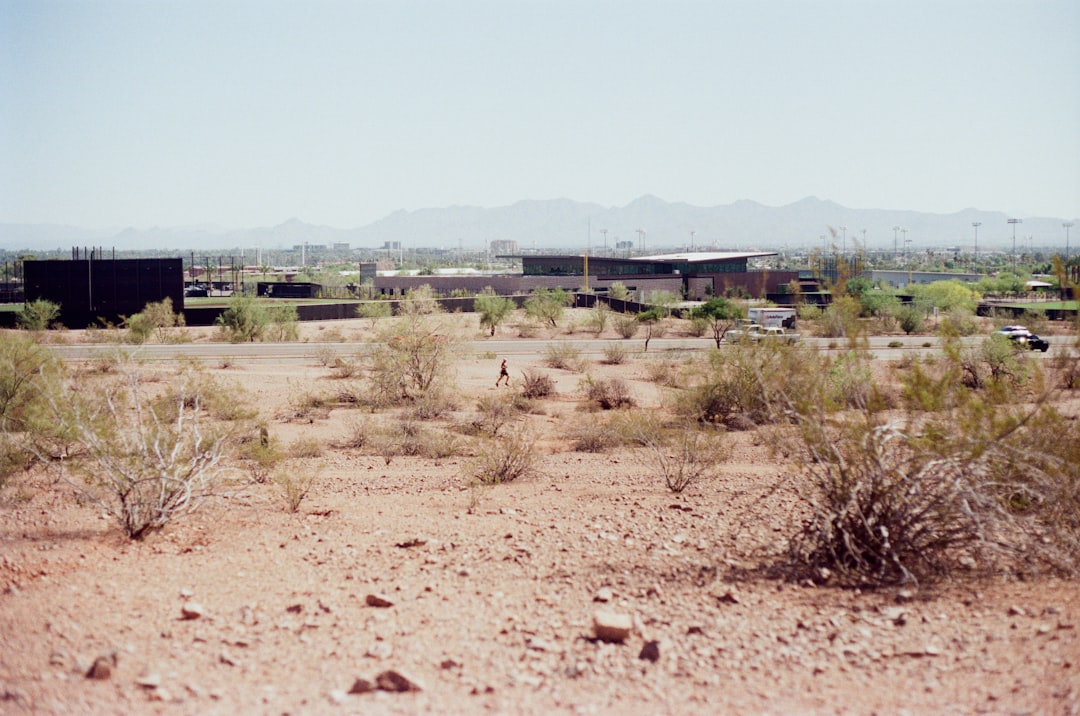
Stos Partners just added another piece to its Arizona industrial portfolio — a small-bay industrial building in Tempe. On the surface, this looks like a routine acquisition. It isn’t.
Small-bay industrial has quietly become one of the most competitive asset classes in the Phoenix metro, and Tempe is ground zero for why institutional investors are fighting for it.
What Stos Partners Actually Bought — and Why Tempe
Stos Partners is a San Diego-based commercial real estate investment firm with a history of targeting value-add industrial properties across the Southwest. Their Tempe acquisition fits a very deliberate pattern: find functional, infill industrial product in supply-constrained submarkets, improve it, and capture rent growth from tenants who have nowhere else to go.
Small-bay industrial — typically buildings broken into units ranging from roughly 1,000 to 10,000 square feet — serves a specific tenant mix. Think HVAC contractors, e-commerce fulfillment operations, auto detailers, landscaping companies, specialty manufacturers. These businesses need real physical space close to their customers, and they can’t easily relocate to the far East Valley every time rent creeps up.
Tempe checks every box for this strategy. The city sits at the geographic center of the metro, bordered by Phoenix, Scottsdale, Mesa, and Chandler. Industrial land here is genuinely scarce. You’re not building a new 50,000-square-foot small-bay facility at Elliot and McClintock overnight — the land either doesn’t exist or doesn’t pencil. That scarcity is exactly what makes an existing building worth chasing.
The Small-Bay Industrial Boom Playing Out Across Metro Phoenix
The Phoenix industrial market has been on an extraordinary run. As of recent market data, metro Phoenix posted industrial vacancy rates below 8%, with certain infill submarkets — including Tempe — running even tighter. Average asking rents for small-bay space have climbed significantly over the past three years, with some submarkets seeing rental growth in the 20–30% range from 2021 to 2024 as demand from last-mile logistics and local service businesses outpaced supply.
Large-format industrial gets the headlines — and there’s plenty of it happening. The $122 million financing behind The Base industrial campus in Glendale is a good example of that big-box, institutional-scale development. But the small-bay story is different. It’s not about Amazon or semiconductor supply chains. It’s about the plumber who needs to store equipment, the small distributor who needs 4,000 square feet near the 101, the craftsman operation that can’t work out of a garage anymore.
Those tenants don’t have flexible location requirements. They need to be where they are. That’s leverage for the landlord.
Why Tempe Specifically Attracts This Kind of Capital
I’ve watched the Tempe industrial market for years, and what strikes me is how durable the demand has been even as conditions shifted. A few reasons this submarket holds up:
- Labor access. Tempe sits next to ASU’s main campus, meaning a large, young workforce within commuting distance. Industrial tenants that need part-time or flexible labor — think light assembly, order fulfillment — value this.
- Freeway connectivity. The US-60, I-10, and Loop 101 all converge within a short drive of central Tempe. For businesses making deliveries or receiving supplies daily, that matters more than people realize.
- Limited developable land. Unlike the Southeast Valley’s open corridors near Signal Butte or Queen Creek, Tempe is essentially built out. Any new industrial product has to displace something existing, which keeps the cost basis of existing buildings elevated.
- Proximity to Scottsdale demand. A segment of Scottsdale’s professional services and contractor base prefers to operate from Tempe industrial space — shorter drive, lower rent, better access.
If you’re weighing Tempe versus Scottsdale for an investment angle, the Scottsdale vs. Tempe comparison is worth a read, because the two markets behave very differently even though they share a border.
What Investors Should Take Away From This Deal
Stos Partners acquiring in Tempe tells you something real about where smart money sees opportunity right now.
This isn’t speculative. The firm isn’t betting on a future tenant that doesn’t exist. Small-bay industrial in infill Phoenix markets has strong in-place demand and a tenant base that has proven remarkably rate-resilient. These aren’t tenants who can suddenly go remote or consolidate operations into a smaller footprint.
For individual investors watching this space: the days of finding small-bay industrial at compressed cap rates in Tempe are largely over. Recent small-bay transactions in the broader Tempe/Mesa corridor have traded in the 5.0–6.0% cap rate range depending on condition and lease term. That’s not cheap. But when you model rent growth against the supply picture, the return stack still makes sense for a patient investor with a 5–7 year hold horizon.
The more actionable insight is this — if you’re sitting on industrial or flex property in the inner East Valley and you haven’t revisited your lease structure recently, you’re probably leaving money on the table. Tenants in infill markets are paying market rents when they renew right now, not the rates from 2019 or 2021.
The Bigger Pattern
Stos isn’t alone. Institutional and private capital has been quietly assembling small-bay industrial positions across the Phoenix metro for the last 24 months. The assets don’t make the same splashy headlines as a 1-million-square-foot logistics center, but they generate steady cash flow from tenants who have limited alternatives and real operational needs.
Watch for more of these acquisitions in Tempe, Mesa, and the I-10 corridor west of downtown Phoenix. The product type is undersupplied, the demand drivers are structural, and sophisticated investors have clearly noticed.
If you’re evaluating industrial as part of a broader Arizona investment strategy, this deal is a useful data point. Stos chose Tempe for a reason — and that reason is still very much in place.