Nationally, the housing market looks like a single story. In Phoenix, it’s two completely different ones happening at the same time — and they’re moving in opposite directions.
That’s the K-shaped housing market in plain English. The top half of the K curves upward: luxury sales are strong, high-end inventory is moving, and builders are chasing that segment hard. The bottom half bends downward: entry-level inventory is near historic lows, first-time buyers are getting squeezed out, and the homes that used to bridge the gap simply don’t exist in enough numbers anymore.
If you’re trying to buy or invest in metro Phoenix right now, understanding which half of that K you’re operating in changes everything.
The Disappearing Starter Home
The data here is pretty stark. Starter home inventory trails 2019 levels by roughly 300,000 listings nationally, according to recent market analysis. In Phoenix specifically, sub-$350,000 homes in livable condition are almost mythical at this point. A few years ago, you could find solid 3-bed/2-bath homes in Laveen, Surprise, or even parts of Mesa in that range. Today, those same homes are pushing $390,000 to $430,000 — if they come up at all.
The structural reasons aren’t complicated:
- Lock-in effect: Existing owners with 3% mortgages aren’t selling. Why would they? Trading into a 6.7% rate on a more expensive home means a payment that could be 60–70% higher on paper.
- Builder economics: It’s extraordinarily difficult to build a home under $350,000 and make money in this cost environment. Land, labor, and materials have reset to a permanently higher baseline.
- Investor absorption: In the 2020–2022 frenzy, institutional and semi-institutional buyers swept up a significant portion of the entry-level stock and converted it to rentals. That inventory is gone from the for-sale market.
One major builder recently acknowledged what most insiders already knew — it’s incredibly difficult to profit from a traditional starter home at today’s cost structure. That’s not a complaint. It’s a market signal about where supply will and won’t flow.
The Luxury Side of the K Is Thriving
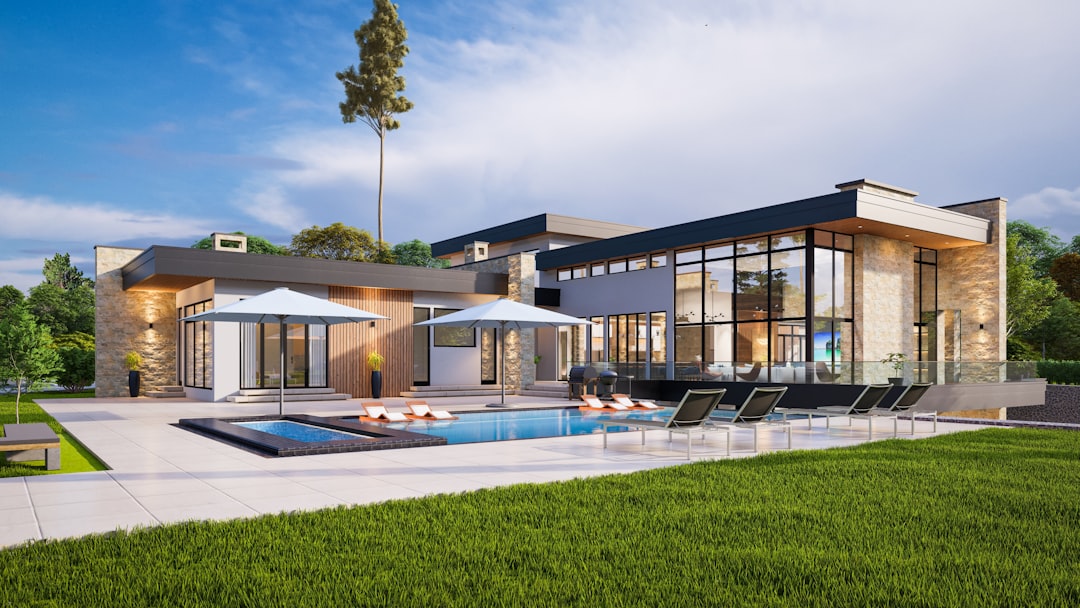
Meanwhile, the upper end of the Phoenix market tells a completely different story. Scottsdale, Paradise Valley, and parts of north Chandler are seeing consistent activity in the $1 million-plus range. Days on market for well-priced luxury listings are tighter than you’d expect given current rates. Cash buyers represent a meaningful share of these transactions, which insulates that segment from the interest rate pressure hitting everyone below them.
There’s a reason for this. Wealthy buyers tend to be less rate-sensitive. Many are either cash-flush from equity gains or trading laterally — selling in a high-cost California or New York market and arriving in Scottsdale with six-figure down payments or all-cash offers. The Phoenix luxury market has been absorbing this migration for years now, and it hasn’t stopped.
The Phoenix luxury segment isn’t without its quirks, though. As I’ve covered before, $1 million buys significantly less than it did even three years ago — square footage, lot size, and finish level have all compressed at that price point. Still, demand hasn’t evaporated. Buyers are adjusting their expectations more than their budgets.
What This Means for Entry-Level Buyers Right Now
Let’s be direct: the path to homeownership for a first-time buyer in metro Phoenix is harder than it has been at any point in the last two decades. A household income of $75,000 — solidly middle class — no longer qualifies for much of the resale market in desirable zip codes without serious creative financing or family help.
Here’s a rough picture of what buyers at different price points are facing today:
| Buyer Profile | Realistic Market Options | Key Challenges |
|---|---|---|
| Under $300K budget | Far West Valley, some Maricopa/Buckeye | Limited inventory, older homes, long commutes |
| $300K–$450K budget | Avondale, Gilbert outskirts, Peoria | Rate sensitivity, competitive multiple offers |
| $450K–$700K budget | Mesa, Chandler, north Glendale | Better inventory, still rate-impacted |
| $700K+ budget | Scottsdale, PV, north Tempe | Most fluid market, cash buyers present |
A few practical paths still exist for buyers on the lower end of this table. Build-to-rent communities have expanded across the West Valley — projects like Avilla Foothills in Surprise offer newer construction at rental rates that, while not building equity, at least provide quality housing while buyers accumulate down payments. Down payment assistance programs through the Arizona Department of Housing are underused. And there are pockets — Maricopa city, parts of Queen Creek just outside the major employment corridors — where entry-level value still exists if the commute trade-off is acceptable.
Why Builders Aren’t Fixing This on Their Own
Some people assume the market will self-correct. Build more homes, prices fall, first-timers can compete again. That’s not playing out.
The economics of small-lot, entry-level construction are brutal. Entitlement timelines in Maricopa County can stretch 18–24 months from land acquisition to permit. Labor costs haven’t retreated. Material costs remain elevated compared to pre-pandemic baselines. When a builder runs the numbers on a 1,400-square-foot home, the math often pushes the viable sales price above what the intended buyer can actually finance.
Builders are rational actors. They go where margins exist. Right now, that’s the move-up and luxury tiers, not the starter home category. Until zoning reform accelerates, permitting gets streamlined, or some structural cost pressure is relieved, this isn’t changing dramatically.
The Bigger Picture
The K-shaped market creates compounding inequality. Existing homeowners at all levels — even modest ones — are accumulating equity. Renters and would-be first-time buyers are not. The gap between those inside the market and those trying to get in keeps widening with each passing quarter.
Phoenix has always had an advantage over coastal cities in relative affordability, but that advantage is eroding faster than most people realize. The metro still draws significant population and job growth, which sustains demand. But if entry-level supply doesn’t materially improve, the next generation of Phoenix homeowners is going to look demographically very different from the current one — older, wealthier, and smaller in number.
If you’re a buyer trying to navigate this right now, my honest advice is this: get clear on which half of the K you’re actually competing in, then work backward from there. The strategies, timelines, and realistic expectations are entirely different depending on your budget. Trying to apply luxury-market patience to an entry-level search — or vice versa — is a losing game. Know your tier, know your corridor, and move decisively when something priced right actually appears.