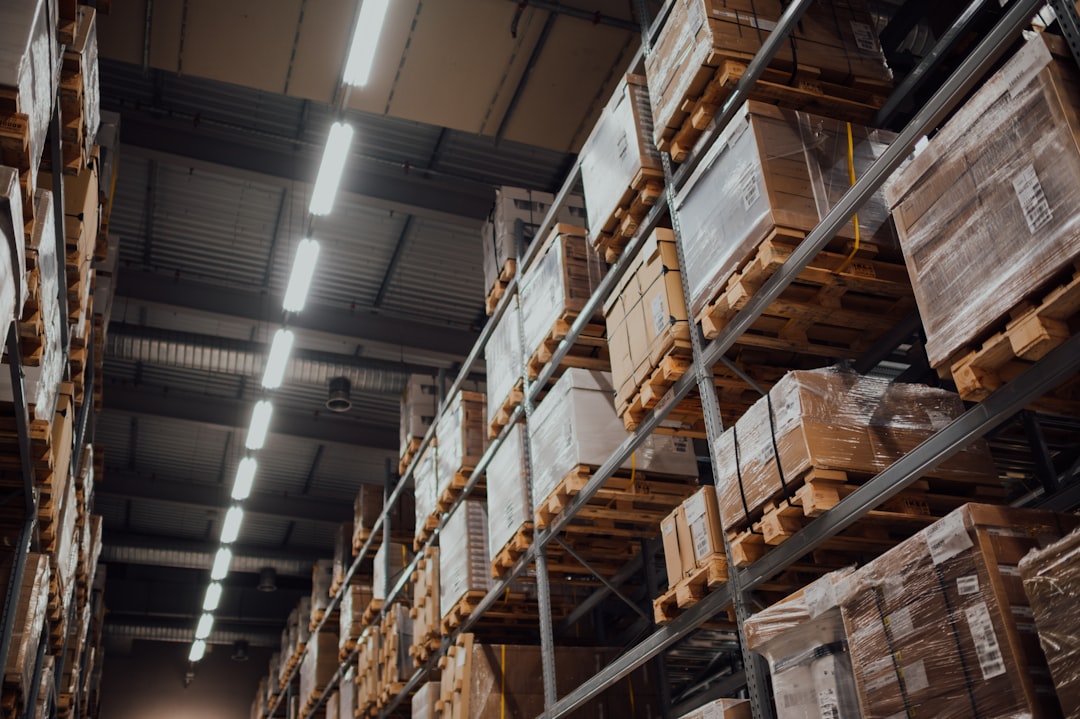
Something is shifting in the southeast Valley — and if you’re paying attention to where industrial money flows, you already know that the Signal Butte and Germann Road corridor in Mesa is about to look very different. A major industrial development has officially broken ground at that intersection, and the ripple effects on local real estate, employment, and surrounding residential values are worth understanding before the cranes disappear and the buildings fill up.
Why This Corner of Mesa Is Getting a Second Look
Mesa has been quietly stealing headlines from Chandler and Gilbert for the past two years when it comes to commercial and industrial absorption. The city’s pro-business permitting process, combined with its position at the eastern edge of the Phoenix metro’s logistics network, makes it attractive to distribution operators, light manufacturers, and tech-adjacent industrial users. Signal Butte and Germann sits at the sweet spot — close enough to US-60 and the Loop 202 to make freight movement practical, but far enough from the urban core that land costs remained manageable long enough for a large-scale project to pencil out.
The development breaking ground here is targeting Class A industrial space, which matters because Class A doesn’t just attract any tenant — it attracts tenants with capital, stable employment bases, and long lease terms. We’re talking about distribution centers, advanced manufacturing operations, and potentially cold storage users that have been hunting the southeast Valley for modern, high-clearance, dock-heavy product. The Phoenix metro saw industrial vacancy sit around 7.8% in 2024 as new supply came online, but demand in the southeast submarket has continued to outpace what’s available, particularly for product above 200,000 square feet.
What “Industrial Development” Actually Means for the Neighborhood
People hear “industrial park” and picture smokestacks. That’s not what Class A industrial looks like in 2025. These are clean, architecturally managed campuses with significant landscaping buffers, LED lighting, and tenant requirements that come with environmental compliance built in. That distinction matters enormously for homeowners in the surrounding communities — Eastmark, Cadence at Gateway, and the established neighborhoods pushing east along Germann — because the fear of blight simply doesn’t apply here.
What does apply is the employment effect. A large industrial campus of this type typically generates between 200 and 600 direct jobs at full lease-up, depending on the tenant mix. Those jobs — logistics coordinators, operations managers, skilled trades workers — represent household incomes that feed directly into the local housing market. Eastmark, which sits just west of the Signal Butte corridor, has median home prices hovering around $480,000 to $520,000 depending on the product and builder. That price point aligns almost perfectly with what a dual-income household earning in the $95,000–$130,000 range can qualify for in today’s rate environment. Industrial employment at scale creates exactly that demographic.
The Investor Angle Nobody Is Talking About Loudly
Here’s where it gets interesting for real estate investors. Single-family rental demand in the southeast Mesa zip codes — we’re talking 85212 and 85209 — has been running tight. Vacancy rates for well-maintained single-family rentals in those zip codes have been under 4%, and average monthly rents for a three-bedroom have climbed to the $2,100–$2,400 range. That gives investors buying in at current prices a gross yield in the 5.5% to 6.2% range before expenses, which isn’t spectacular on paper but holds up well when you factor in the appreciation trajectory this submarket has shown over the past five years.
New industrial anchors accelerate that trajectory. Employers commit to multi-year leases. Workers need housing close to work. The retail follows — grocery anchored centers, medical offices, gyms — and suddenly a corridor that felt like the edge of the map becomes a destination. I’ve watched this exact pattern play out along the Elliot Road corridor in Gilbert and along Williams Field Road in Chandler. The Signal Butte and Germann intersection is roughly two to three years behind those markets in maturation, which means the window for buying ahead of full build-out is still open, but it won’t stay that way.
What Buyers and Sellers Near the Development Should Do Right Now
If you own a home within a mile of this development and you’ve been thinking about selling, get a current market analysis done before you price. The comps from six months ago are already soft — values in this pocket have been inching up as word of the project spread through commercial real estate circles, and residential buyers who do their homework are starting to connect those same dots.
Buyers eyeing new construction in Eastmark or the communities along Ray Road east of Signal Butte should move with purpose. Builders in this part of Mesa are still offering incentives — rate buydowns, closing cost contributions — but those incentives shrink as absorption tightens. Once the first major industrial tenant signs and announces, the story shifts from potential to reality, and pricing adjusts accordingly.
Investors should be underwriting deals in 85212 right now, running conservative rent assumptions and stress-testing at 7% cap rates to make sure the deal survives a rate environment that stays elevated. The ones who wait for certainty will pay for certainty — in purchase price.
The Signal Butte and Germann groundbreaking is not a background story. It’s a signal — and in Mesa’s real estate market, the people who read signals early tend to be the ones who build wealth. If you want to talk through what this development means for a specific address, a specific investment strategy, or a specific timeline, that’s exactly the conversation we should be having.