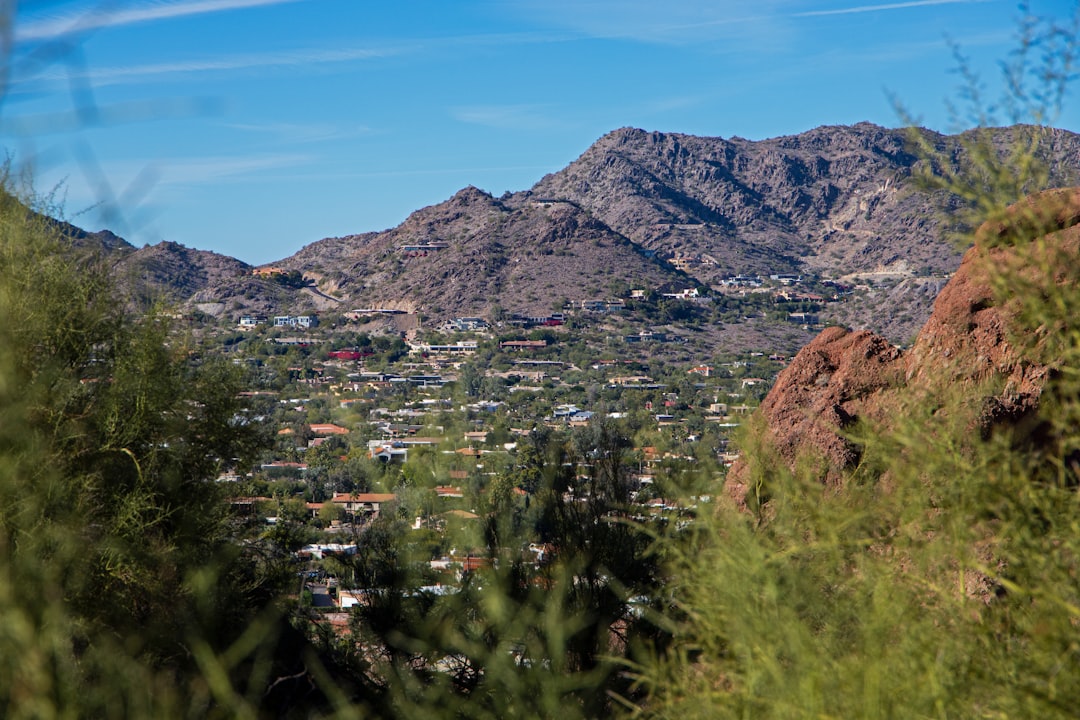
Five years ago, $1 million in Phoenix bought you a sprawling 4,500-square-foot estate in Scottsdale with a resort pool, a four-car garage, and enough travertine to tile a small hotel. Today, that same million dollars gets you a nice home — maybe 2,800 square feet, a modest backyard, and the privilege of competing against three other offers. The Phoenix luxury market has fundamentally shifted, and if you’re shopping at the $1 million threshold, you need to understand exactly what you’re walking into.
What “Luxury” Means in Phoenix Now
The definition of luxury real estate has always been a moving target, but the target is moving faster in Phoenix than almost anywhere in the Sun Belt. The Phoenix metro median home price crossed $450,000 in early 2024, and luxury — traditionally defined as the top 10% of the market — now starts closer to $900,000 to $950,000 in submarkets like Paradise Valley, north Scottsdale, and the Arcadia neighborhood of Phoenix proper.
That’s a staggering shift. In 2019, the luxury floor in those same areas sat around $600,000. That’s a 50%-plus appreciation in under five years on the entry point alone. What’s driving it? A combination of sustained in-migration from California and the Pacific Northwest, limited land supply in desirable corridors, and construction costs that haven’t meaningfully declined since the post-COVID materials spike. Lumber, labor, and land are all more expensive, and builders pass every dollar of that cost downstream to the buyer.
Right now, active luxury inventory above $1 million in Maricopa County sits at roughly 2,200 listings — which sounds like a lot until you factor in that demand at this price tier has doubled since 2020. Days on market for well-priced luxury homes in the $1M to $1.5M range average around 45 days, compared to 90-plus days for that bracket just four years ago. That’s a market that has tightened significantly.
The Neighborhoods Where $1 Million Still Goes Far
Not every Phoenix zip code has repriced at the same velocity. Smart buyers are paying attention to where the value arbitrage still exists.
North Phoenix — specifically the areas around Anthem and Desert Hills — still offers newer construction in the $900,000 to $1.1 million range with square footage in the 3,200 to 3,800 range. You’re farther from the urban core, but you’re getting significantly more home for the money, newer infrastructure, and access to some of the best-rated schools in the Valley.
Chandler’s south end has also held its value proposition better than Scottsdale. In zip codes like 85249, you can still find custom and semi-custom homes in the $1 million to $1.2 million range that would price $300,000 to $400,000 higher if they sat five miles north in the Scottsdale zip codes. Same square footage. Similar finishes. The Chandler Unified School District is the difference-maker for families, and the proximity to the Intel and TSMC supply chain jobs corridor is quietly adding long-term demand pressure to this area.
Contrast that with 85253 — central Paradise Valley — where $1 million gets you a teardown lot or a dated 1970s ranch that the market has priced for its land value alone. That’s not a knock on Paradise Valley; it’s one of the most desirable enclaves in the entire Southwest. But buyers need to know that $1 million there is a starting point, not a finishing one.
What Buyers Are Actually Getting for $1 Million Right Now
Let’s be specific. A $1 million budget in Scottsdale’s McCormick Ranch neighborhood today typically yields a 2,600 to 3,000 square foot home, built in the 1980s or 1990s, on a 9,000 to 11,000 square foot lot. Expect good bones and a livable layout, but plan on $100,000 to $150,000 in kitchen and bath upgrades if you want the finishes to match the price tag. The tradeoff is location — McCormick Ranch gives you walkability, mature landscaping, access to the canal paths, and a zip code that holds value through downturns.
Spend that same million in the Fulton Ranch area of Chandler and you’re looking at 3,400 to 3,800 square feet, built post-2005, with a larger lot and often a pool already included. More home, less cachet. Depending on your priorities, that’s either a great deal or a compromise — only you can decide which.
One thing every buyer in this bracket should understand: financing costs matter more than ever. On a $1 million purchase with 20% down, a 7% mortgage rate means a monthly payment north of $5,300 on principal and interest alone. Add taxes, insurance, and HOA fees in many communities, and you’re looking at $6,200 to $6,800 per month. That’s a number that requires serious income, and it’s one reason inventory at this price tier hasn’t been absorbed as quickly as sellers expected.
The Investor Angle on Phoenix Luxury
Rental yields in the luxury tier have compressed, but they haven’t collapsed. A well-located $1.1 million home in north Scottsdale near the 101 and Kierland Commons can generate $5,500 to $6,500 per month in long-term rent, putting gross yields in the 6% to 7% range before expenses. That’s not the 8% to 9% you could capture in 2018, but it’s still competitive compared to most coastal markets where luxury rentals routinely yield 3% to 4%.
Short-term rental investors need to do their homework before buying. Several municipalities in the Valley have tightened short-term rental regulations, and Scottsdale in particular has implemented noise ordinances and registration requirements that add compliance overhead. That doesn’t make the strategy unworkable — it just means the days of buying any luxury home and printing money on Airbnb are over. Location, HOA rules, and local ordinance compliance all need to be verified before you close.
What to Do Before You Start Shopping
If you’re entering the Phoenix luxury market in 2024, go in with your eyes open and your financing locked down. Get fully underwritten — not just pre-approved — before you write an offer. Sellers at this price point are sophisticated, and a soft pre-approval letter won’t win you a competitive situation.
Work with someone who knows the micro-market. The difference between 85254 and 85255 is more than a zip code — it’s school districts, flood maps, HOA structures, and resale liquidity. Do a deep-dive on property tax history, because Maricopa County assessments have moved sharply upward, and the tax bill on a newly assessed $1 million property can surprise buyers who anchored their budget on the previous owner’s bill.
Finally, get clear on your own definition of value. In today’s Phoenix luxury market, $1 million is a serious commitment that demands a serious strategy. Whether you’re buying a primary home, a second home, or an investment property, the buyers who win are the ones who know exactly what they want, understand what the market will actually deliver for their budget, and move decisively when the right property appears.