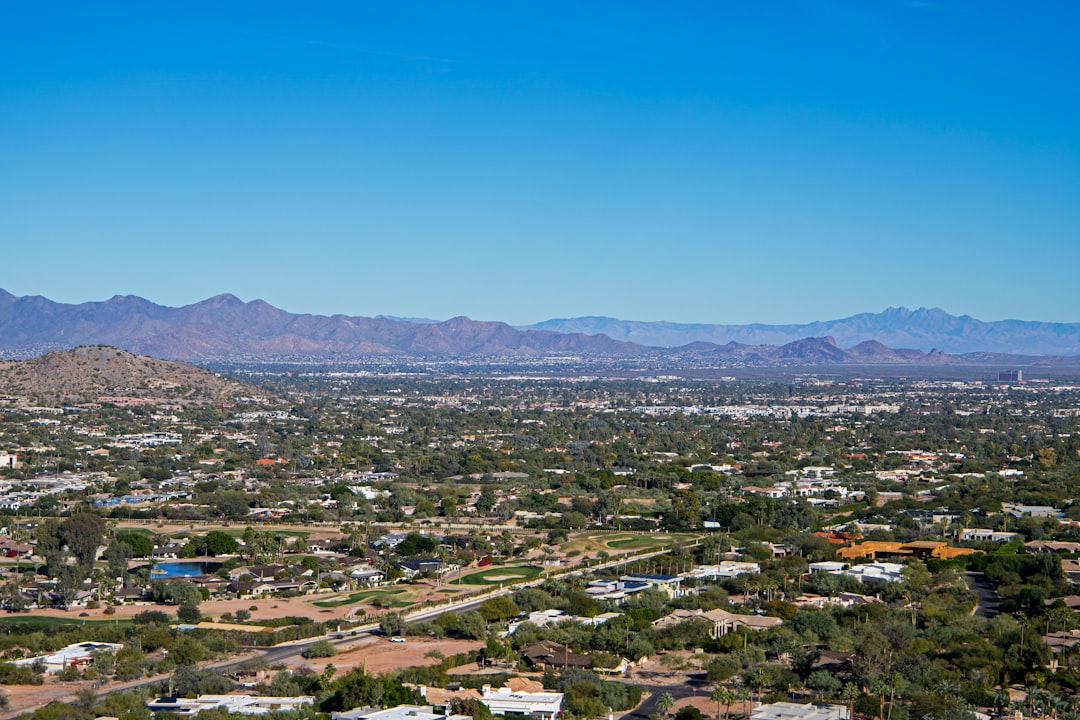
Homes in the Phoenix metro are sitting on the market longer than they have in years, and neither buyers nor sellers seem willing to blink first. That’s not a slow market — that’s a standoff. And if you’re trying to make a move right now, understanding why this stalemate exists is the difference between making a smart decision and waiting yourself into a corner.
The Lock-In Effect Is Real — and It’s Reshaping the Valley
The core problem isn’t demand. Phoenix still has population growth, job creation, and in-migration from California, the Pacific Northwest, and the Midwest pushing people toward the Valley every month. The problem is supply — or more specifically, the kind of supply that’s available.
Roughly 70% of current Arizona homeowners with a mortgage are locked into interest rates below 4%. Today’s 30-year fixed rates are hovering around 7% or higher, depending on credit profile and loan type. That gap is enormous. A homeowner sitting on a $450,000 home in Gilbert with a 3.25% rate and a $1,600 monthly payment has almost no financial incentive to sell, buy something else at 7%, and watch their payment jump to $2,500 or more on a similar home. So they stay put. This phenomenon — widely called the “lock-in effect” — has stripped the Phoenix metro of what would otherwise be a healthy flow of resale inventory.
Active listings across the greater Phoenix area are still running well below the historical norms we saw in the 2012–2019 period. We’re looking at somewhere in the range of 15,000 to 18,000 active single-family listings across Maricopa County — tight by any measure for a metro this size. In a more balanced market, you’d expect to see north of 25,000. That missing inventory is suppressing transaction volume without meaningfully pushing prices down, because the buyers who are active still have to compete for whatever actually comes to market.
Buyers Are Waiting for a Rate Drop That May Not Come Fast Enough
On the other side of the table, buyers are frozen too — but for different reasons. A lot of people who want to purchase are essentially betting that mortgage rates will fall significantly within the next six to twelve months. Some of them are right that rates will ease. The question is whether the drop will be large enough to change the math, and whether they can afford to wait.
Here’s the issue with that strategy in a market like Scottsdale or North Phoenix: when rates do drop — even by half a point — a wave of sidelined buyers tends to re-enter the market simultaneously. Inventory that looks manageable right now can get absorbed quickly once financing becomes more accessible. The buyers who waited for relief may find themselves in bidding wars again, erasing whatever savings they expected to gain.
Median home prices in the Phoenix metro have remained stubbornly resilient. As of mid-2024, the median single-family sale price is sitting around $450,000 to $465,000, depending on the data source. That’s essentially flat year-over-year — not crashing, not surging. Sellers aren’t panicking and slashing prices. Buyers aren’t stepping in at scale because the monthly payment doesn’t pencil out at today’s rates. Both sides are watching each other, waiting for someone to move.
New Construction Is Filling the Gap — But With Limitations
One place where the stalemate is actually breaking down is new construction. Builders in the East Valley and West Valley — think Queen Creek, Buckeye, and Surprise — have stepped into the vacuum left by the thin resale market. They’re doing something individual sellers can’t easily do: buying down mortgage rates through incentives.
A builder can offer a 2-1 buydown or a fixed rate in the low-to-mid 5% range through their preferred lender, which makes the payment conversation much more palatable for a buyer. That’s a meaningful advantage, and it explains why new home sales have been outperforming resale transactions in the Phoenix metro for several consecutive quarters. Builders moved roughly 14,000 to 16,000 new homes in Maricopa County last year — a substantial share of total sales volume.
The catch is that new construction tends to push buyers toward the suburban fringe, further from employment centers, and entry-level pricing is still a challenge. A new build in Buckeye might start in the low $300,000s for a smaller floorplan, but anything with reasonable size and finishes quickly approaches $400,000 to $450,000. It’s a relief valve, not a solution.
What This Means for Your Next Move
Waiting for perfect conditions in this market is a losing strategy — mostly because perfect conditions don’t exist right now for either side, and that’s unlikely to change dramatically in the short term.
If you’re a buyer, start by getting pre-approved and honestly assess your payment tolerance at current rates. A home at 7% today can potentially be refinanced at 5.5% or lower if rates fall over the next couple of years — a strategy real estate professionals call “marry the house, date the rate.” It’s not a magic fix, but it’s a real framework for making a purchase decision in a high-rate environment. Also look hard at builder incentives in areas like Maricopa, Casa Grande, and the far East Valley if your budget is under $400,000.
Sellers sitting on significant equity shouldn’t assume that hesitation is free. Property taxes, maintenance, opportunity cost on that equity — holding isn’t neutral. If you need to right-size, relocate for work, or access equity for another investment, the math may favor moving now rather than waiting for a market that perfectly benefits you.
The Phoenix housing market is stuck, but stalemates eventually break. Position yourself to move when they do.