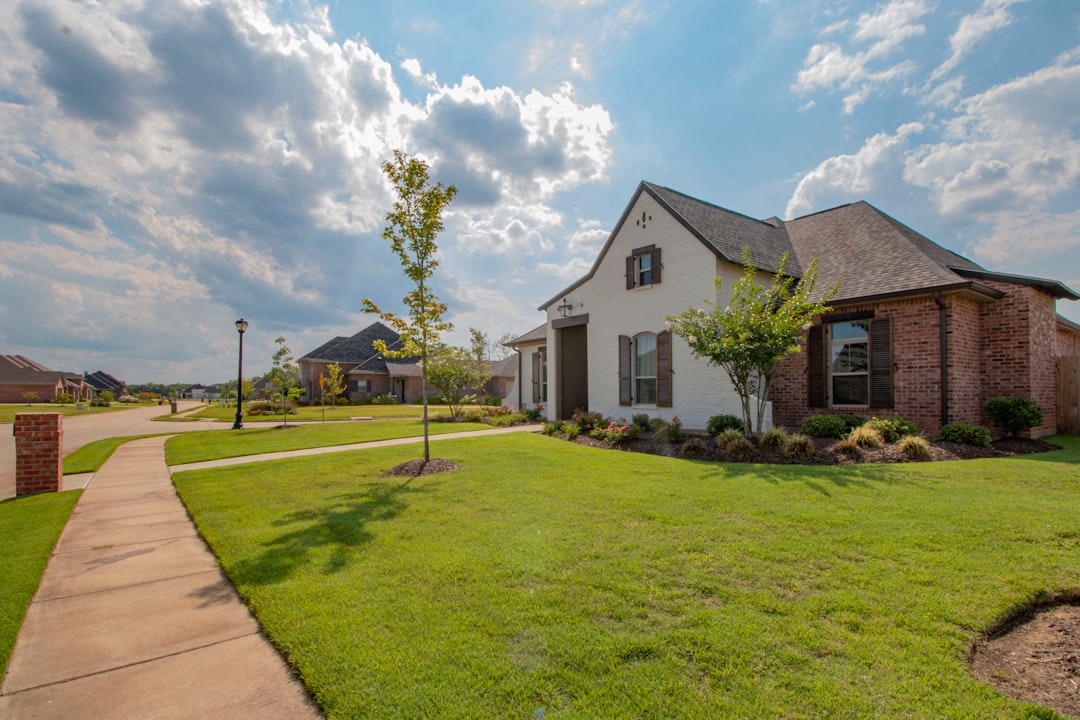
Park Street Homes is doing something the big national builders largely refuse to do: drop a new home on a forgotten infill lot in the middle of an established neighborhood, instead of chasing another master-planned community on the outer edge of the metro.
That’s the model. And they’re expanding it.
What Urban Infill Actually Means — and Why It’s Hard
Infill homebuilding sounds simple. Find a vacant lot inside an existing neighborhood, pull permits, build a house. But anyone who’s tried to make that pencil out knows the reality is messier.
Lots are irregularly shaped. Utilities may need extensions. Neighboring homes create setback puzzles. City staff sometimes aren’t sure how to process permits for a one-off single-family build in a zone that hasn’t seen new construction in decades. And you don’t get the volume discounts that come from building 200 homes at once in Buckeye or Queen Creek.
Park Street Homes has spent years developing processes specifically around these friction points. That’s the core of their competitive advantage — not finding easier land, but getting genuinely good at the hard land.
Why This Model Matters in Phoenix Right Now
Metro Phoenix has an inventory problem that cuts in two directions at once. On one hand, the outer suburban pipeline is still producing. On the other, close-in neighborhoods — places like South Phoenix, parts of Mesa near downtown, pockets of Glendale and Peoria — have scattered infill lots that sit idle for years because no one wants the hassle.
Starter home inventory trails 2019 by 300,000 listings nationally, and metro Phoenix reflects that gap sharply. Buyers who want walkability, proximity to employment corridors, or just a shorter commute are often stuck choosing between an aging resale that needs significant work and a brand-new home 45 minutes from downtown.
Infill builders step into that gap. A new home at an established address — already served by existing schools, roads, and services — is exactly what a segment of buyers can’t easily find elsewhere. Park Street’s expansion signals that the demand signal is clear enough to justify scaling the operational complexity.
The Numbers Behind the Opportunity
Infill development is genuinely harder to underwrite than greenfield, but the margins can be compelling when you’ve systematized the process.
Consider what’s driving the case:
- As of recent market data, median home prices in established Phoenix-area zip codes close to employment centers sit roughly 15–25% higher per square foot than comparable product in outer suburbs — buyers pay a location premium
- Infill lots in metro Phoenix can often be acquired at prices that haven’t moved as aggressively as improved residential properties, because the buyer pool for raw infill land is thin
- Carrying costs on a single infill build are substantially lower in absolute dollar terms than a large tract development, which helps manage risk on a per-project basis
The trade-off is volume. You can’t move as many units per year chasing infill as you can with a master-planned subdivision. Park Street’s answer to that is geographic expansion — more markets, more lots in the pipeline simultaneously, building a portfolio of small projects rather than one giant one.
It’s a different operating model than D.R. Horton or Meritage runs. But it’s one that the Arizona Builders Alliance has increasingly flagged as important to closing the supply gap in ways large-format builders structurally can’t.
Where Infill Homes Land in the Market
One thing worth understanding is where these homes price and who buys them.
Park Street isn’t typically building luxury infill — they’re not dropping $1.2 million custom homes on leftover lots in Arcadia. The model is more centered on attainable new construction: homes that can compete with entry-level resale on price while offering the new-construction advantages buyers care about (warranties, modern systems, energy efficiency, no deferred maintenance).
That positions the product squarely in one of the most underserved segments of the market right now. Builders have openly acknowledged the difficulty of delivering a profitable entry-level home, and several national names have said publicly it’s “incredibly difficult” to make the math work on a traditional starter home at scale.
Infill flips that logic slightly. Because the land is a single lot — not a 500-acre master plan requiring roads, utilities, and amenity centers — the infrastructure cost per unit is different. The home can potentially hit a price point that a large tract builder can’t reach with equivalent quality.
Who’s Buying These Homes
From what I see in the market, the infill buyer typically fits one of three profiles:
- First-time buyers priced out of resale in desirable zip codes who want new construction without moving to the far suburbs
- Move-down buyers who want to downsize but stay close to their existing neighborhood and social infrastructure
- Investors who recognize the rental yield potential on a brand-new home in an established, already-rented neighborhood
Each of these groups is large and active in metro Phoenix right now. That’s not an accident — it’s why Park Street’s expansion timing makes sense.
What Expansion Actually Looks Like
Scaling an infill operation isn’t just about finding more lots. It requires building systems: relationships with city planners across multiple jurisdictions, efficient permit-tracking processes, subcontractor networks flexible enough to handle non-standard projects, and land acquisition pipelines that can identify and close on scattered-site lots faster than competitors.
Park Street’s expansion suggests they’ve built enough of that infrastructure to replicate it. The question the market will answer over the next few years is whether they can hit volume that justifies the overhead without losing the operational discipline that makes the model work in the first place.
One risk worth watching: as the infill model gets more attention, land prices for vacant in-fill lots could firm up. Right now, thin buyer demand for raw infill land is part of what makes acquisition costs work. If more capital chases the same strategy, that edge compresses.
What This Means If You’re Buying or Investing in Phoenix
If you’re a buyer focused on established neighborhoods and you’ve been frustrated by the resale inventory, Park Street’s expansion gives you more options to watch. New infill construction can show up in zip codes where you’d otherwise never see a new-construction listing — it won’t be in the master-planned community tabs on the search portals, so ask your agent specifically.
If you’re an investor, pay attention to the neighborhoods they’re targeting. Infill builders do localized due diligence that most investors don’t — when a builder is willing to put a new home in a specific micro-location, that’s a signal about rents, demand depth, and neighborhood trajectory worth noting.
The infill model won’t solve Phoenix’s housing supply problem on its own. But builders who’ve cracked the operational code on it are delivering product in exactly the locations where supply has been most stubbornly absent. That matters — and Park Street’s move to scale it up is worth watching closely.