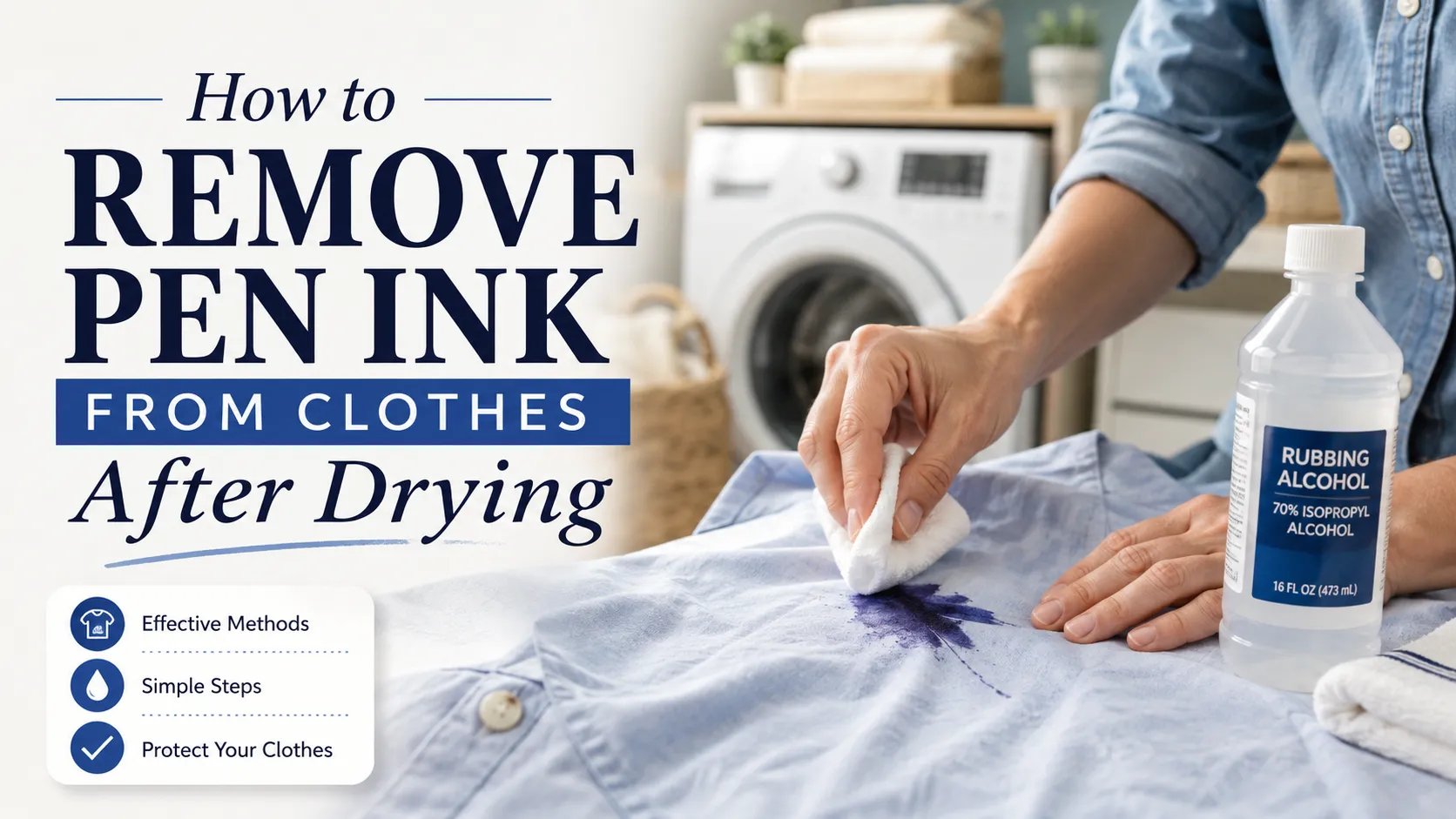
Dried pen ink can be harder to remove than a fresh mark, but the garment is not necessarily ruined. Even when the clothing has already been through the dryer, careful pretreatment may still reduce or remove the stain.
The safest approach is controlled rather than aggressive. Check the fabric first, transfer as much ink as possible into an absorbent material, wash the garment, and inspect it after air drying. If the fabric begins to change, stop instead of moving automatically to a stronger cleaner.
Can You Remove Pen Ink After It Has Dried?
A dried ink stain may still respond to treatment. The result depends on the ink, the fabric, previous washing, and whether the garment has already been exposed to dryer heat.
A mark that dried naturally is different from one that went unnoticed through a complete wash-and-dry cycle. Dryer heat can make a remaining stain more difficult to remove, but that does not mean every heat-exposed ink mark is permanent.
Use the condition of the garment to decide what happens next.
| Situation | Best next step | Avoid |
|---|---|---|
| Ink dried before washing | Test and pretreat the stain | Repeated washing without pretreatment |
| Washed but not tumble-dried | Treat the remaining mark before drying | Assuming the stain disappeared while wet |
| Already through the dryer | Try a controlled repeat treatment | Using extra heat as a shortcut |
| Alcohol affects the fabric | Use a compatible alternative | Continuing with the same solvent |
| Dry-clean-only garment | Use a professional cleaner | Home solvent experiments |
Age, heat exposure, ink type, and fabric all influence how readily the mark responds. A gradual improvement is a better reason to continue than simply increasing the strength of the treatment.
Check the Fabric Before Treating Dried Ink
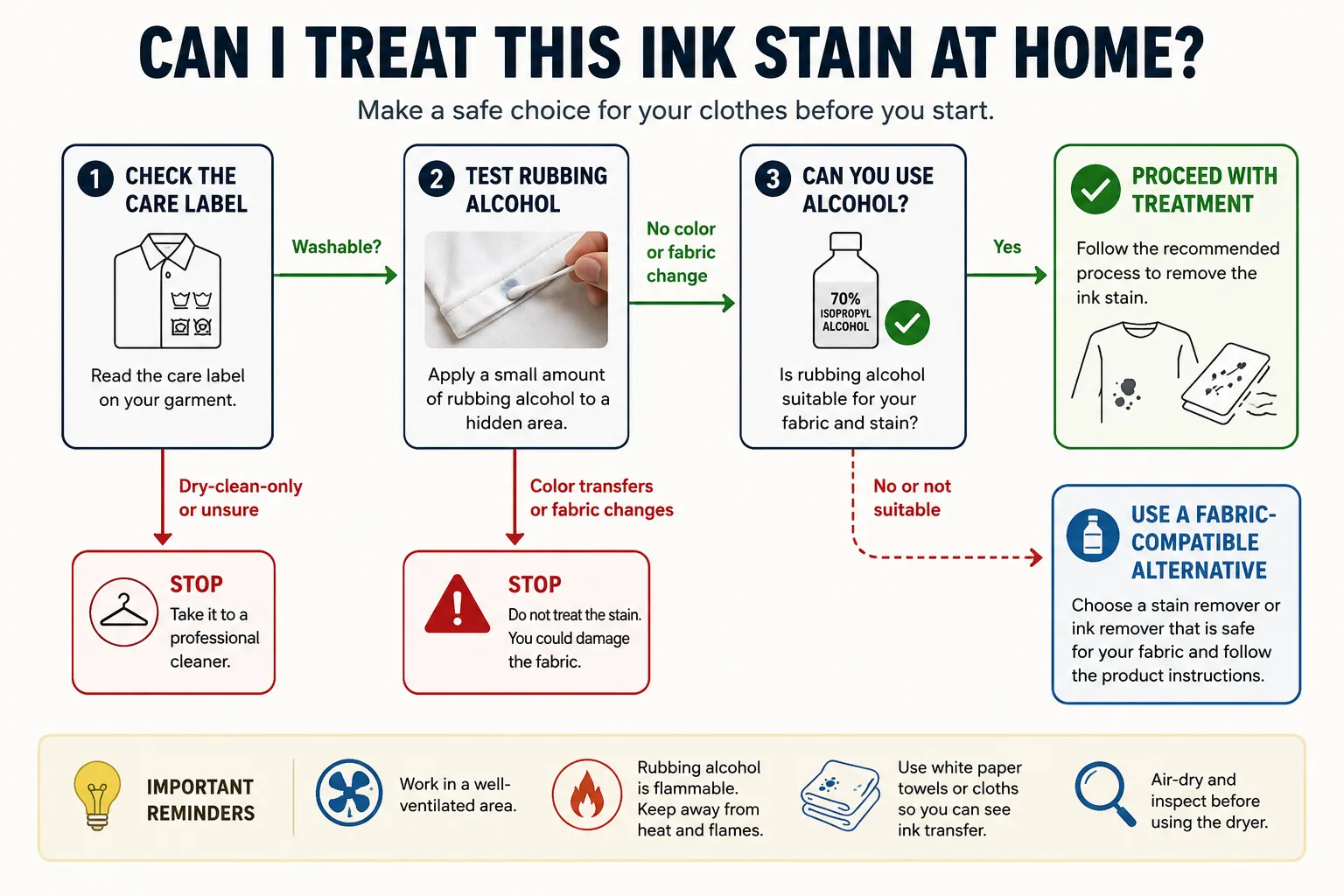
Read the garment’s care label before applying a stain remover. It tells you how the clothing should normally be washed and dried, but a washable garment is not automatically safe for every spot-treatment solvent.
Test rubbing alcohol or another remover on an inconspicuous area such as an inside seam. Blot the test area with a white cloth and check for color transfer or a visible change in the surface.
Stop home treatment when:
- the garment’s dye transfers during the test;
- the fabric becomes discolored, distorted, rough, or otherwise altered;
- the item is labeled dry-clean-only;
- the material is delicate or valuable and its compatibility with the cleaner is uncertain.
A faint stain may be preferable to irreversible color loss or fabric damage.
How to Remove Pen Ink From Clothes After Drying
Rubbing alcohol is a standard pretreatment for some ink stains on compatible fabrics. The technique is designed to move loosened ink into clean absorbent material instead of spreading it across the garment.
Rubbing alcohol is also flammable. Keep it away from flames, sparks, hot surfaces, and other ignition sources while working, and use it in a well-ventilated area.
Once the fabric has passed the hidden-area test, use this process:
-
Place the stained section face-down on clean white paper towels or a white absorbent cloth. Position the backing directly beneath the ink.
-
Apply rubbing alcohol from the back of the stained area. Work on the affected section rather than soaking a large portion of the garment.
-
Move or replace the backing as ink transfers. Once a section of the towel becomes stained, expose the garment to a clean absorbent area instead of letting it sit on transferred ink.
-
Continue while you are seeing progress. Avoid aggressive scrubbing. The clean backing should receive the loosened ink while the visible mark gradually becomes lighter.
-
Rinse the treated section thoroughly. Remove the alcohol and loosened residue before proceeding with normal laundry treatment.
-
Apply a compatible laundry pretreatment when appropriate. Use a detergent or prewash stain remover according to its label rather than improvising a stronger concentration or longer treatment time.
-
Wash according to the garment’s care instructions. A dried stain is not a reason to choose a hotter wash than the fabric permits.
-
Air-dry and inspect the garment. Examine the area in normal light before using a heated dryer again.
Do not judge the result while the fabric is still wet. Moisture can make a faint remaining mark less obvious.
If the stain is clearly lighter and the fabric remains unchanged, another careful pretreatment may be worthwhile. A stain that does not respond at all calls for a different decision rather than endless repetition.
Does the Type of Pen Change the Treatment?
Different writing inks do not necessarily respond in the same way. You do not need to identify the exact formulation, but knowing whether the mark came from a ballpoint, gel pen, or felt-tip marker can help set realistic expectations.
Ballpoint Ink
Ballpoint ink is one of the common situations where rubbing alcohol may be useful on a compatible washable fabric.
Focus on transferring the ink rather than scrubbing the visible side. When each fresh section of absorbent backing picks up more color and the garment itself remains stable, continuing the same method is usually more sensible than switching cleaners immediately.
Gel and Water-Based Pen Ink
Gel and other water-based writing inks should not automatically be treated as identical to ballpoint ink. Formulations vary, particularly once the stain has dried or gone through a wash cycle.
Start with a fabric-compatible treatment and reassess the stain before moving to another product. A pen being described as water-based does not guarantee that an old mark will disappear during an ordinary wash.
Felt-Tip and Other Difficult Inks
Some felt-tip and other ink stains may not come out completely, especially after they have dried or undergone previous treatment.
Repeatedly applying stronger products can eventually do more damage to the textile than the original mark. When a tested method produces little improvement, set realistic expectations before escalating further.
How to Remove Dried Pen Ink Without Alcohol
Rubbing alcohol is not the right choice when it fails the hidden-area test or when the garment’s material requires a different approach. You also do not need to work through a succession of household ingredients to find a substitute.
One option is a commercial fabric stain remover specifically labeled for ink and compatible with the garment. Follow that product’s instructions for application, contact time, rinsing, and laundering rather than borrowing directions from another cleaner.
Avoid jumping randomly between hairspray, vinegar, lemon juice, baking soda, toothpaste, and other frequently suggested home remedies. Using several products in succession can complicate stain removal and make it harder to determine what is affecting the fabric.
Do not combine stain-removal products unless their labels specifically indicate that the combination is safe. Different cleaning products can contain incompatible ingredients.
For a dry-clean-only, delicate, expensive, or highly color-sensitive garment, a professional cleaner is the safer alternative. Explain that the mark is pen ink and tell the cleaner which products have already been used.
What to Do If the Ink Stain Is Still There
The stain’s response tells you more than the number of times you have treated it.
When ink continues to transfer to fresh backing and the garment remains unchanged, repeating the same tested process may produce further improvement. Replace the absorbent material as it becomes stained rather than working over the transferred ink.
No visible progress after a careful attempt is a reason to reconsider the method. A commercial stain remover intended for ink and suitable for the fabric may be the next option.
Stop when the treatment begins changing the garment instead of the stain. Fading dye, altered texture, distortion, or surface damage means further experimentation is becoming more costly than the mark itself.
Complete removal is not always possible. Some ink stains remain visible despite appropriate treatment, so there is no useful number of repetitions that guarantees success.
Avoid These Mistakes With Set-In Ink
Dried stains often encourage people to use more force or more chemicals. Neither approach automatically improves the result.
Avoid these common mistakes:
- scrubbing hard enough to spread the ink or stress the fibers;
- skipping the hidden-area test before using a solvent;
- leaving the garment on ink-saturated paper towels;
- combining stain-removal products without compatible label directions;
- exceeding a cleaner’s recommended concentration or treatment time;
- using hotter wash settings than the garment permits;
- putting the item back into the dryer while a visible stain remains.
The goal is not to find the strongest possible cleaner. It is to keep removing ink while the fabric remains stable.
A dried pen stain is best handled as a sequence of decisions. Test the material, transfer the ink into clean backing, rinse and wash the garment, then air-dry it before judging the result. Continue only when the mark is improving and the fabric is tolerating the process.
FAQ
Can pen ink still come out of clothes after going through the dryer?
Sometimes. Dryer heat can make an ink stain harder to remove, but it does not automatically make every stain permanent. Careful pretreatment may still reduce or remove the mark.
What should I do if rubbing alcohol changes the fabric color?
Stop using it. Rinse the tested area if appropriate and switch to a stain remover specifically labeled as safe for that fabric, or use professional cleaning for delicate or valuable clothing.
Can I remove dried pen ink without rubbing alcohol?
Yes. A commercial fabric stain remover or ink remover that is compatible with the garment is one alternative. Follow the product label rather than combining several household remedies.
Should I wash the garment again if the ink stain is still visible?
Pretreat the remaining stain before washing again. After laundering, air-dry the garment and inspect it before using the dryer. Repeat only if the stain is improving and the fabric remains undamaged.
When should I stop trying to remove a dried ink stain at home?
Stop if the fabric starts fading, changing texture, becoming distorted, or otherwise showing damage. Professional cleaning is also the safer choice for dry-clean-only, delicate, expensive, or highly color-sensitive garments.