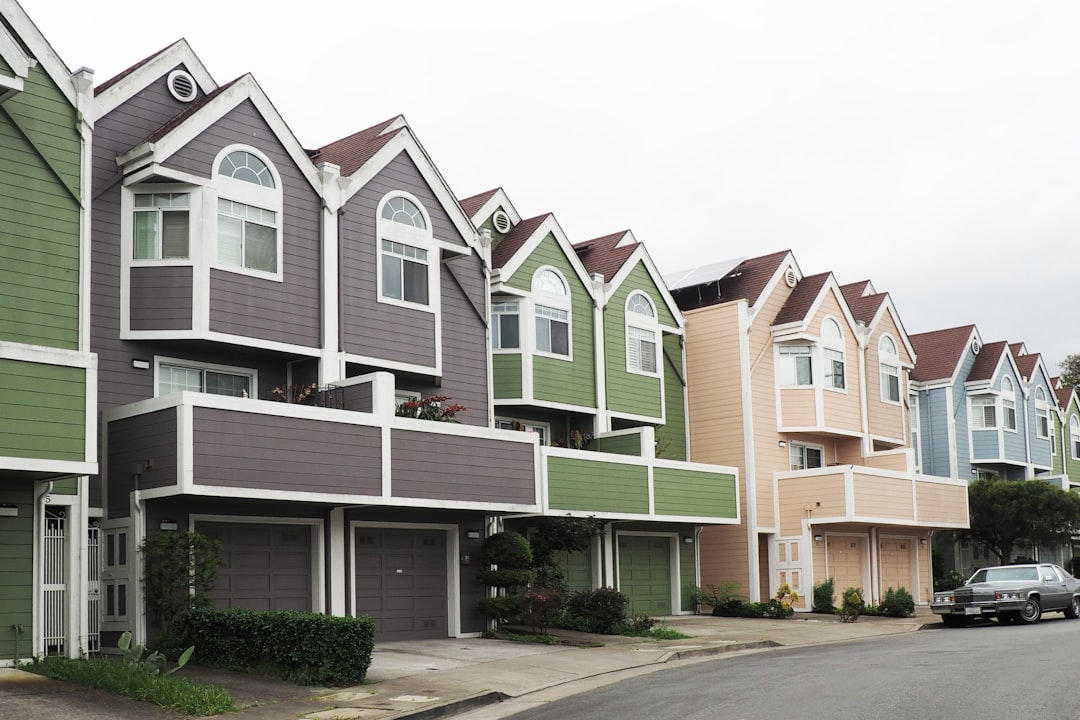
There’s a real gap between what $1,500 a month gets you in Scottsdale and what it gets you in Surprise. Same metro area, same budget — completely different apartment. If you’re renting in Greater Phoenix and stretching every dollar, knowing which submarkets still work at that price point can save you hundreds of square feet and a lot of frustration.
Let me break down where $1,500 goes the furthest right now, and where it barely gets you through the door.
The $1,500 Reality Check Across Metro Phoenix
As of recent market data, the median asking rent for a one-bedroom in metro Phoenix hovers around $1,350–$1,450 depending on the submarket. A two-bedroom? You’re typically looking at $1,600–$1,850 in the more central or upscale areas. That puts $1,500 in a real squeeze zone — it’s above the floor but below the ceiling, which means your outcome depends almost entirely on where you search.
Here’s a rough comparison of what $1,500 typically gets you across major Phoenix-area markets:
| Submarket | Typical Unit at $1,500 | Approx. Sq Ft |
|---|---|---|
| Scottsdale (85251/85254) | Studio or small 1BR | 550–700 sq ft |
| Tempe (near ASU) | 1BR in older complex | 650–780 sq ft |
| Gilbert / Chandler | 1BR, newer build | 750–900 sq ft |
| Mesa (east side) | 1BR–2BR depending on complex | 800–1,000 sq ft |
| Surprise / El Mirage | 2BR in some communities | 950–1,100 sq ft |
| Buckeye | 2BR, sometimes with garage | 1,050–1,200 sq ft |
The pattern is straightforward. Every mile you move west or southeast from central Scottsdale, your dollars stretch further.
The West Valley Sweet Spot
Surprise has become one of the better-kept secrets for renters on a budget in this metro. New build-to-rent communities have been arriving steadily, and some of them offer surprisingly competitive pricing for the product. Developments like Avilla Foothills bring 108 build-to-rent units to Surprise in a format that blurs the line between apartment and single-family home — detached or attached units with private yards and no shared hallways.
At $1,500, you’re sometimes landing a two-bedroom in Surprise with a backyard. That’s a hard thing to say about Scottsdale.
Buckeye, further west along the I-10 corridor, is similar. The trade-off is commute time. If you’re working in downtown Phoenix or the Tempe/Chandler tech corridor, you’re looking at 35–50 minutes each way depending on traffic. For remote workers or anyone working in the Goodyear or Avondale employment base, though? That commute disappears.
East Valley: The Middle Ground
Gilbert and Chandler are interesting. They’re not cheap, but they deliver more for $1,500 than Scottsdale does, and the infrastructure — schools, retail, walkable town centers — is genuinely better than the far-west valley in many respects.
At $1,500 in Gilbert, you can realistically find a one-bedroom in a newer complex with a pool, fitness center, and a reasonable commute to the Intel campus or the Price Road tech corridor. Square footage typically runs 800–900 square feet, which is livable for one person or a couple.
Mesa’s east side, particularly around the Gateway area, has seen a lot of development. The Destination at Gateway brings a 163-acre power center to Mesa, which is bringing more retail and employment density to that pocket — which often accelerates apartment construction nearby. New supply in an area tends to moderate rents in the short term, so this is actually a smart corridor to watch if you’re trying to get the most out of a $1,500 budget right now.
Scottsdale and Tempe: What $1,500 Buys (Spoiler: Not Much)
I’ll be direct. If Scottsdale is your priority, $1,500 is tight. You’re looking at studios in older complexes, or one-bedrooms where the property management hasn’t renovated since 2008. The zip codes along the 101 — 85254, 85260, 85255 — are commanding rents that have priced out the $1,500 renter from anything newer than 15 years old.
Tempe near ASU is also expensive relative to product quality at this price point. You can find something, but you’re competing with students and short-term renters, and the complexes that fall under $1,500 tend to be aging.
If you’re flexible on neighborhood, the 85281 zip code in central Tempe has some older walk-up apartments that occasionally list in the $1,300–$1,500 range for a one-bedroom — but inventory is thin and they move fast.
Three Things to Do Before You Sign a Lease
- Check the total cost, not the listed rent. Water, trash, pest control, and mandatory amenity fees can add $75–$150/month to advertised rents in Phoenix. A “1,450/mo” listing can easily run $1,600 all-in.
- Look at summer utility bills. Arizona’s summer cooling costs are no joke. A cheap apartment with no insulation or single-pane windows can cost $200–$300/month in July and August just to keep it at 78 degrees. Ask the leasing office what average bills look like in peak summer.
- Consider newer build-to-rent over traditional apartments. Newer BTR communities in the west valley often have better construction quality and lower utility costs than older garden-style apartments, even when the base rent looks similar.
The Bottom Line
$1,500 is still a workable budget in metro Phoenix — but only if you’re willing to look beyond the obvious zip codes. Surprise, Buckeye, and the east Mesa/Gateway corridor are where that budget has real purchasing power. Central Scottsdale and Tempe will chew through it fast and leave you cramped.
The Phoenix rental market has more inventory than it did two years ago, which means you have leverage right now. Use it. Tour multiple properties, ask about move-in specials, and don’t default to the first complex with a “now leasing” sign. Your best deal is almost always one submarket further out than you initially considered.