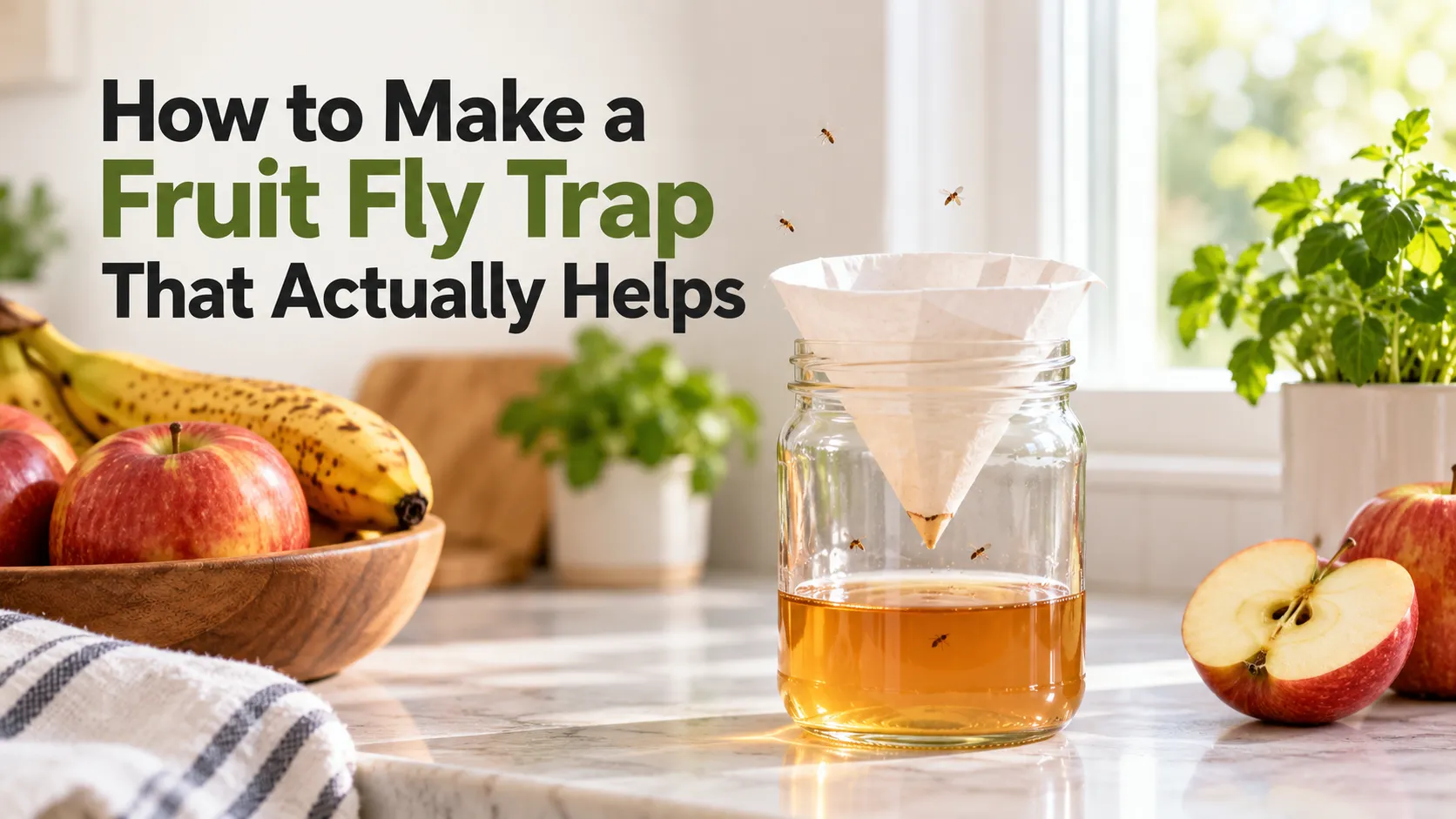
A homemade fruit fly trap can catch the adults buzzing around your kitchen, but trapping them is only part of the solution. Fruit flies are closely associated with fermenting food and liquid residues, so lasting control also means finding and removing whatever is feeding or breeding them.
A simple jar trap uses a fermented bait such as apple cider vinegar, a little dish soap, and a restricted opening. Before making one, check that the insects are actually fruit flies rather than another small household fly.
Make Sure You Are Trapping Fruit Flies
Fruit flies commonly gather around ripe or overripe produce, fermenting liquids, beverage containers, trash, recycling, and other places where food residue is breaking down.
Other tiny indoor flies can appear similar from a distance, so where they are most active provides a useful clue.
| Where you see the most activity | Possible pest | What to inspect |
|---|---|---|
| Around fruit, bottles, trash, or recycling | Fruit flies | Fermenting food or liquid residue |
| Around houseplant soil | Fungus gnats | Moist potting mix and plant containers |
| Around drains | Fruit flies or drain-associated flies | The insects themselves and organic buildup in the drain |
| Across several rooms with no clear concentration | Identification uncertain | Find the strongest activity before choosing a treatment |
Location alone is not enough to identify every small fly. Fruit flies can also use organic material in drains and garbage disposals, so do not assume every insect near a sink is a drain fly.
If activity is strongest around produce, beverage containers, recycling, or food waste, a fruit fly trap is a reasonable next step.
Make a Simple Fruit Fly Trap
The trap does not need special equipment. Its job is to attract adult fruit flies to fermented bait and make it difficult for them to leave.
Gather:
- a small jar, cup, or glass;
- apple cider vinegar;
- liquid dish soap;
- paper for a funnel, or a cover that can be given small entry holes.
Then assemble it:
- Add the bait. Pour a shallow pool of apple cider vinegar into the bottom of the container. An exact volume is not necessary for a basic household trap.
- Add a little dish soap. Soap reduces the liquid’s surface tension, making flies that contact the bait more likely to sink instead of remaining on the surface.
- Create a restricted entrance. Roll paper into a funnel and place it in the jar with a small opening at the bottom, keeping the tip above the liquid. A cover with small holes is another workable design.
- Set the trap near the activity. Put it close to where the flies are gathering after removing exposed food and obvious residue.
- Watch the surrounding area as well as the trap. Continued activity usually means the breeding source still needs attention.
The narrow funnel or small openings allow flies to enter while making the route back out less obvious. Avoid leaving extra food beside the trap simply to draw more insects into the area.
What Can You Use Instead of Apple Cider Vinegar?
Apple cider vinegar is popular because its fermented odor attracts fruit flies, but it is not the only suitable bait.
Other options supported by household pest-control guidance include:
- red wine;
- beer;
- ripe or mashed fruit.
When using fruit, put it inside a closed trap design such as a jar with a paper funnel rather than leaving it exposed on the counter.
There is no need to set out several different recipes at once. First make sure the trap is close to the actual activity and that competing food sources have been removed. A poorly placed trap will not become more useful simply because it contains a more complicated mixture.
Put the Trap Where the Flies Are Active
Placement matters because the trap competes with every other attractive food or liquid in the room.
Start near the area with the most visible activity. Check places such as:
- fruit and produce storage;
- trash or compost containers;
- recycling bins;
- bottles and cans with beverage residue;
- areas where juice, wine, beer, or other food liquids may have spilled.
Keep the trap somewhere stable and away from uncovered food or food-preparation surfaces.
If most of the insects are around houseplants, reconsider whether you are dealing with fungus gnats. If they concentrate around plumbing, inspect both the insects and the drain rather than assuming that another vinegar trap is automatically the answer.
Remove What Is Breeding the Flies
A trap catches adults. It does not remove the fermenting material that allows more fruit flies to develop.
Finding and removing breeding and food sources is therefore the most important part of long-term control. Inspect more than the obvious fruit bowl.
Look for:
- overripe or damaged produce;
- produce stored out of sight in cabinets, bags, or pantry areas;
- residue inside trash or compost containers;
- unrinsed beverage bottles and cans;
- liquid collected at the bottom of recycling bins;
- spills beneath containers or appliances;
- fermenting food scraps in overlooked areas.
Discard spoiled produce and clean containers with food or beverage residue. Rinse recyclable containers when practical before leaving them indoors.
Do not stop searching just because the visible produce has been removed. A forgotten piece of fruit, beverage residue, or another fermenting source can keep the problem going while the trap continues catching only part of the adult population.
Once competing sources are gone, the trap has a better chance of attracting the remaining flies.
Why Your Fruit Fly Trap Is Not Working
A trap that catches little or nothing does not necessarily need stronger bait. Check the setup first.
You May Have the Wrong Insect
Small flies around moist houseplant soil are often fungus gnats. Flies near plumbing may be fruit flies, drain-associated flies, or another species.
Recheck the insects and where they are concentrated before changing the recipe.
Another Food Source Is More Attractive
Overripe produce, beverage residue, or food waste may compete with the trap. Remove those sources instead of trying to overpower them with extra ingredients.
The Trap Is Too Far Away
Place the jar near the area where the flies are already active. Moving it closer often makes more sense than adding several traps around the room.
The Bait Has Dried Out or Spilled
If the liquid has dried up or the trap has been knocked over, clean the container and rebuild it with fresh bait. There is no universal replacement schedule that applies to every homemade setup.
New Flies Keep Emerging
Catching adults can make a trap look successful even while the infestation continues. If flies keep appearing, search again for fermenting food, beverage residue, or another overlooked breeding site.
Trap the Adults and Remove the Source
A homemade fruit fly trap works best as part of a two-part strategy: catch the adults that are already flying around, then remove the fermenting material that is producing more of them.
If activity continues after likely breeding sources have been removed and the trap is positioned near the affected area, reconsider the insect identification before adding more bait or trying another recipe.
FAQ
What attracts fruit flies to a homemade trap?
Fruit flies are attracted to fermenting food and liquids. Apple cider vinegar is commonly used as bait, but red wine, beer, or ripe fruit can also work in a properly designed trap.
Why do you add dish soap to a fruit fly trap?
Dish soap reduces the liquid’s surface tension. This makes it harder for flies that touch the bait to stay on the surface, increasing the chance that they sink into the liquid.
Can I make a fruit fly trap without apple cider vinegar?
Yes. Red wine, beer, or ripe mashed fruit can serve as alternative bait. Whatever you use, remove other exposed fermenting food nearby so it does not compete with the trap.
How long does it take for a fruit fly trap to work?
There is no universal timeframe because results depend on the number of flies, trap placement, bait, and whether the breeding source is still present. If the trap catches little or nothing, check the insect identification and nearby food sources before changing the recipe.
Why do fruit flies keep coming back even when the trap catches them?
The trap mainly removes adult flies. If fermenting food, beverage residue, trash, recycling residue, or another breeding source remains, new adults can continue to appear. Removing that source is essential for longer-term control.