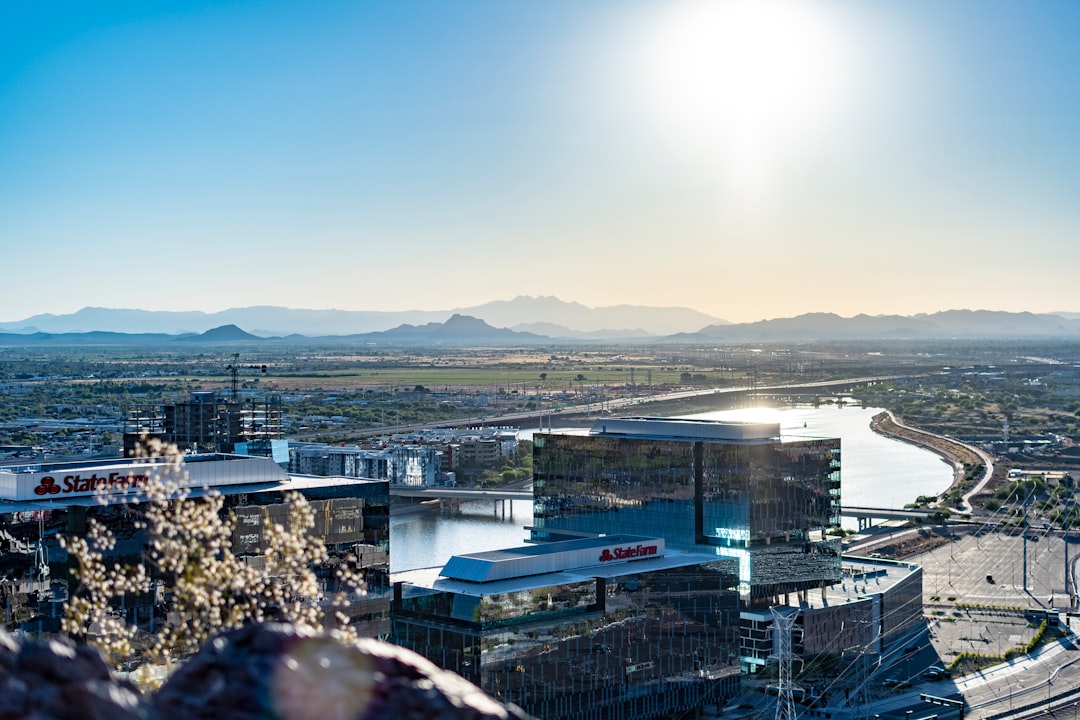
Tempe doesn’t do things halfway anymore. The city that built its identity around Arizona State University and Mill Avenue has been quietly stacking one major development on top of another for the better part of a decade. But the topping-out of Astria Tempe — the placement of its final structural beam — signals something bigger than another apartment tower going up. This is a genuine skyline-altering moment for one of the most investment-active cities in the entire Phoenix metro.
What Astria Tempe Actually Is
Astria Tempe is a mixed-use high-rise development rising along the south bank of Tempe Town Lake, in the area that’s become ground zero for luxury vertical living in the East Valley. When complete, the tower will rank as the second-tallest building in Tempe — a distinction that tells you a lot about how dramatically this city has changed. A decade ago, Tempe’s skyline was defined by a handful of mid-rise office buildings and the occasional hotel. Now it’s competing with Scottsdale and Downtown Phoenix for prestige residential and commercial square footage.
The project includes hundreds of residential units stacked above ground-floor retail and amenity space, with views of Tempe Town Lake and the South Mountain silhouette that frankly rival anything you’d see from Scottsdale’s waterfront. The tower is designed for the renter — or eventual condo buyer — who wants walkability, proximity to ASU Research Park and the light rail corridor, and the kind of rooftop-and-pool lifestyle that used to require a zip code in Paradise Valley or Old Town Scottsdale.
Why the Topping-Out Milestone Matters
Placing the final beam on a high-rise isn’t just a construction photo op. It signals that the structural phase is complete and that interior buildout is now the focus. For a project this size, that typically means the opening timeline firms up — and the market starts paying attention.
For investors tracking the Tempe multifamily sector, this is meaningful data. Astria’s lease-up will provide a real-time read on where top-of-market rents are heading in 85281 and the surrounding zip codes. As of recent market data, Class A multifamily rents in the Tempe/ASU corridor have been holding in the $1,800–$2,400 range for one- and two-bedroom units, with newer luxury product pushing past $3,000 for premium floors and lake-facing views. Astria will test the ceiling.
Tempe’s Development Momentum Is Stacking Up Fast
Astria doesn’t exist in a vacuum. Tempe has been one of the most active infill development markets in Arizona for the last several years, and the pace hasn’t slowed.
Here’s what’s been driving that momentum:
- ASU’s continued expansion keeps demand for high-quality housing near campus persistently strong — and that demand isn’t limited to students. Faculty, staff, and young professionals working at companies that have relocated near the university all feed the same rental pool.
- The Tempe Town Lake corridor has matured into a genuine live-work-play district. The combination of walkable amenities, light rail access, and proximity to major employers in Chandler and Mesa makes it a legitimate alternative to Downtown Phoenix.
- Corporate relocations to the Southeast Valley have kept rental vacancy rates tighter than most other Phoenix submarkets. As of recent market data, Tempe has maintained vacancy rates in the 5–7% range even as new supply has come online — a sign the demand is real, not just projected.
- Infill scarcity is a real constraint. Tempe is largely landlocked, hemmed in by Scottsdale to the north, Mesa to the east, and Phoenix to the west. That means high-rise and mid-rise projects are often the only way to add density, which gives completed projects like Astria a structural advantage.
If you’re trying to compare where to deploy real estate investment dollars in the East Valley, the gap between Tempe and neighboring cities is worth understanding. I’ve broken down Scottsdale vs Tempe for investment in detail — the short version is that Tempe offers better yield potential on multifamily while Scottsdale still wins on luxury appreciation.
What This Means for the Surrounding Neighborhood
High-profile towers like Astria tend to compress cap rates and push comparable rents upward within a half-mile radius. Owners of older product near Tempe Town Lake — think 1980s and 1990s garden-style apartments along Rural Road or Apache Boulevard — often see rent pressure from above as new Class A supply resets tenant expectations.
That cuts both ways. For value-add investors who already own near the lake corridor, a rising rent ceiling is good news. For renters in the area looking for affordable alternatives, it narrows options. The Phoenix office market’s signs of recovery also matter here — more office workers coming back to the Southeast Valley means more demand for exactly the kind of product Astria is delivering.
One thing I’ve noticed personally: listings within walking distance of Tempe Town Lake have started to price themselves differently in the last 18 months. Sellers are citing the new towers as a neighborhood amenity — proximity to a walkable, high-density district — rather than treating it as a potential drawback. That shift in seller psychology usually precedes a sustained move in comps.
The Bigger Picture for Phoenix Metro Growth
Tempe’s vertical push fits the broader arc of what’s happening across the Phoenix metro. Land in desirable infill locations is scarce and expensive. Builders who want to deliver units efficiently are going up, not out. That’s a structural shift from the sprawl model that defined Phoenix development for decades, and it’s creating a genuine high-density core in the East Valley for the first time.
Projects like Astria also attract the kind of national capital attention that benefits the entire submarket. When institutional investors and REITs see a second-tallest tower in Tempe topping out, they update their models for the whole corridor.
What to Do With This Information
If you own investment property near Tempe Town Lake, now is the time to benchmark your rents against incoming luxury supply — and figure out whether a value-add play makes sense before Astria opens its doors and resets tenant expectations. If you’re a buyer or investor considering the area, watch Astria’s lease-up velocity closely. Fast absorption at premium rents confirms the thesis. Slow absorption is a signal to recalibrate your underwriting assumptions.
Either way, Tempe’s skyline is telling you something. Pay attention.